Psilocybin mushroom can be an effective treatment for anxiety. Here’s what I’ve discovered through my practice.
We all experience anxiety at one time or another. Anxiety rarely exists alone as an isolated event or issue. It occurs within the larger context of a person’s life and is often situational. When I’m working with someone who is struggling with chronic anxiety, the first questions I ask aren’t necessarily about their symptoms. They’re about their overall well-being and self care.
- Are you eating nutritious food?
- Are you drinking enough water?
- Do you get regular exercise and sunshine?
- Are you sleeping well; getting enough rest?
- Do you feel overwhelmed, overworked, overstimulated, or exhausted?
- What is the quality of your relationships with spouse, partner, family, and friends?
- Do you have people in your life who you trust and feel comfortable confiding in?
These lifestyle habits and practices are part of a one’s overall self care and contribute hugely to general mental and emotional well being.
Clearly there are other significant factors such as past trauma that must be taken into consideration. A skilled therapist can help with these.
Psychedelics have a remarkable ability to open the mind and heart, creating an opportunity to examine more deeply what is truly happening beneath the surface of one’s life experience.
Looking Beyond the Symptoms
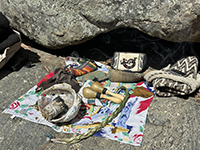
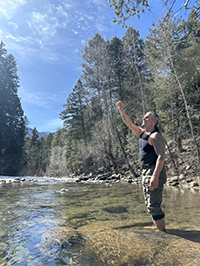
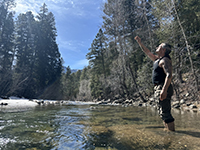
Our work takes place in nature, within the context of ceremony, and through meaningful dialogue. This approach helps people to explore the causes of their anxiety and put them into perspective, in a safe, sacred container, so they can finally begin to let them go.
The intention is not to diagnose, treat symptoms, or fix what’s wrong, but to help someone come to a deeper appreciation of what is right and resourceful within themselves.
Healing is supported by developing a deeper connection within one’s inner self and learning to cultivate daily practices to strengthen that connection. Rather than accept what we’ve been taught, told, or conditioned to believe about self, life, and God, a large part of the healing process occurs when we examine our beliefs, recognize our conditioning, and begin to develop a new relationship with those aspects.
Healing Is for Everyone
People from every faith and background come to this work. Christians, Buddhists, Catholics, Jews, atheists, and agnostics, all of whom are reaching for a healing resolution or deeper meaning. Often they come in response to an inner call.
What matters isn’t any one faith or belief system. What matters is the willingness to come in peace, do the deep inner work, and honestly examine your life, your beliefs, social conditioning, past trauma, and whatever else may present itself.
When these experiences and habits of thought are brought to light and viewed with compassion and curiosity, what follows is a change in perspective, which in itself is profoundly healing.
Healing often begins with a change of mind. The changing of one’s mind from one way of thinking to another is the transformation.
A Client’s Experience
One client, a military veteran, arrived with severe anxiety, the severity of which he did not disclose initially. Other issues were overlying the anxiety and appeared to take precedence.
During our work together, there were many internal shifts. In a post-retreat conversation, I asked him how he was doing with the anxiety.
He replied simply: “My anxiety is gone.” Even after several months his report was the same.
That’s one person’s story, but it reflects a pattern I’ve observed repeatedly. Time after time, people who struggle with anxiety find that it diminishes significantly or disappears altogether.
The same has been true for many people dealing with depression, PTSD, and addiction—substance addiction and addictive behaviors.
Are Psychedelic Mushrooms Safe?
One of the questions I’m asked most often is:
Are psychedelic mushrooms safe? Are they addictive?
My answer is straightforward:
They are safe and they are not addictive.
Many people I’ve worked with have a history of substance abuse and sobriety. Naturally, they are concerned if working with psychedelics would violate their commitment to remain sober.
Through thoughtful discussion and careful consideration, many discover that the use of magic mushrooms is not a conflict. Afterwards they realize that the experience supports their sobriety.
These plant medicines are approached not as recreational substances or drugs, but as sacred allies—tools for healing, transformation, and personal development. When treated with respect and intention, they have profoundly life-changing effects.
What the Research Shows
Over many years, researchers have studied brain function during psychedelic experiences.
Brain imaging demonstrates increased communication between different regions of the brain. Areas involved in rigid control and habitual thinking become quieter. New pathways and patterns of communication within the nervous system emerge.
Researchers have observed:
- Increased neuroplasticity, allowing the brain to form new patterns of thought and behavior.
- Increased neurogenesis and synaptic activity, supporting healthier brain function.
The scientific evidence continues to grow and is highly compelling.
Naturally, we don’t measure brain activity during our retreats, but we consistently witness positive changes reflected in people’s lives. We see it in their relationships, their improved quality of life, and in how they relate to themselves after returning home.
Is One Retreat Enough?
Another common question is whether someone must continue taking mushrooms after attending a retreat.
Unlike many pharmaceutical drugs that require uninterrupted use to maintain their effectiveness, psychedelics can produce lasting change after a single journey or after several carefully guided experiences. There is not a reliance on the psychedelic for continued well being.
Research and clinical experience suggest that the positive changes and continued improvement in one’s life grow over time.
That doesn’t mean the work ends after the retreat. Lasting change is supported by integrating simple daily practices such as:
- Quiet morning reflection
- Spending time in nature
- Regular movement and exercise
- Creative self expression
- Consistent and intentional self-care
Healing ultimately returns us to the fundamental aspects of caring for ourselves with intention and compassion—and asking for help when we need it.
The Side Effects
People sometimes ask me about the side effects of psychedelic mushrooms.
I often smile at this. The answer is that the side effects include becoming more loving and open, more generous and accepting, more connected and communicative, more grounded and self assured, more joyful, peaceful, and loving.
For many people, myself included, these are side effects worth suffering.
Love and Blessings,
Tom

[…] Source: https://drtomgarcia.com/psychedelics/psilocybin-mushroom/anxiety […]